
The system adapts to your protocols
The first objection we hear from outside France is that the system must be built around French practice. It is not. Alert types, responder qualifications, dispatch radius and targeting are all configuration, not development.
Everything on this page is set by your administrator in the back office, without our involvement and without a release.
Alert types
Cardiac arrest is where we started. It is not the limit of the system.
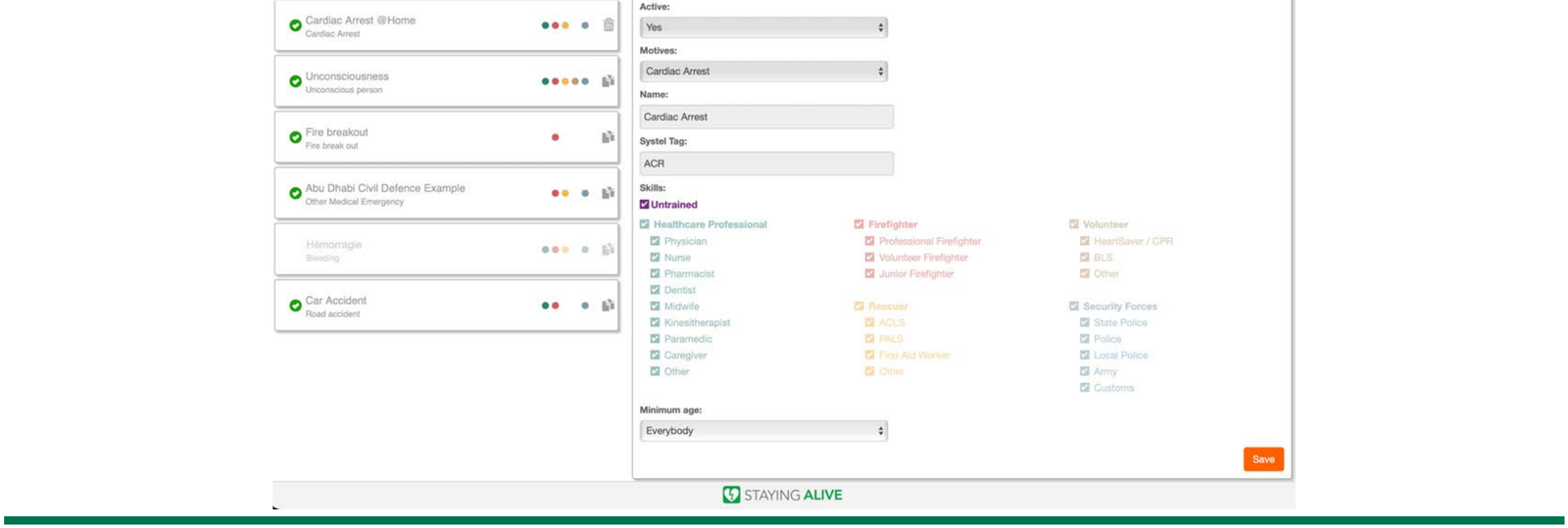
Cardiac arrest
Including a distinct configuration for arrest at home, where the response pattern differs from a public place.
Other medical emergencies
Unconsciousness, haemorrhage, and any category you define.
Fire
Fire breakout, with its own responder profile.
Road accident
Different qualifications, different radius, different volume.
Each type carries its own responder profile, its own radius and its own number of people dispatched. A territory can run several types in parallel with entirely different rules.
Who gets dispatched
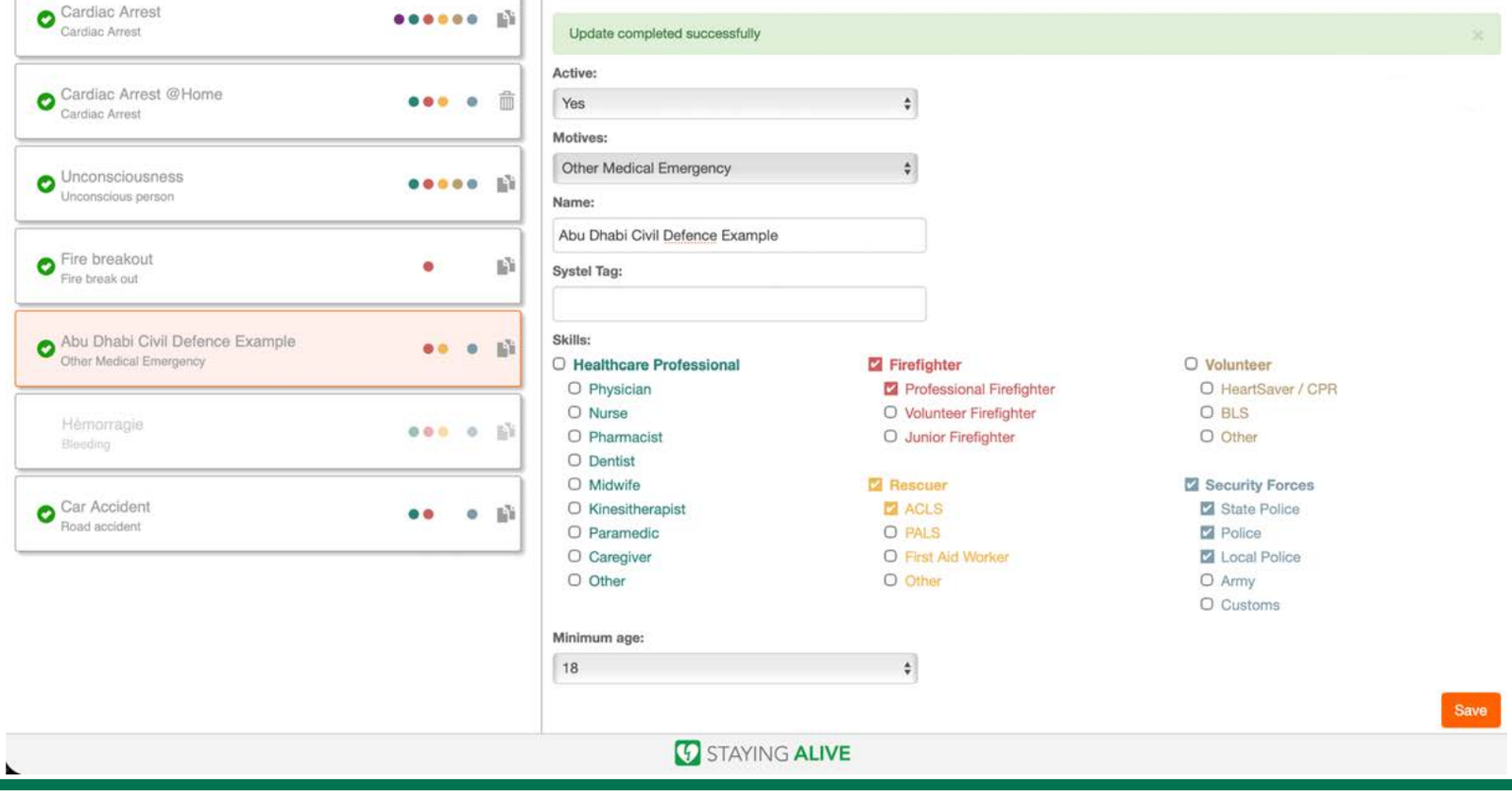
The qualification matrix is the heart of the configuration. For each alert type you choose exactly which categories of responder are engaged.
- Healthcare professionals: physician, nurse, pharmacist, dentist, midwife, physiotherapist, paramedic, caregiver.
- Rescuers: advanced and paediatric life support, first aid workers.
- Firefighters: professional, volunteer, junior.
- Security forces: state police, local police, army, customs.
- Volunteers: basic life support, CPR-trained, and untrained volunteers who can still fetch a defibrillator.
A minimum age can be set per alert type. Untrained responders can be included or excluded type by type.
Dispatch parameters
Running it day to day
- Multilingual back office, so your staff work in their own language.
- Test mode with simulated responders, for training and for rehearsing procedures without disturbing anyone.
- Automated qualification checks: an algorithm can validate uploaded training certificates, which removes the manual bottleneck as the community grows.
- Density maps to decide where to recruit and where to install defibrillators.
- Surveys to collect structured feedback after each intervention.
One network, several missions
A responder community built for cardiac arrest can be dispatched to a fire, a road accident or a natural disaster. For a public authority weighing the cost of building such a network, that changes the calculation entirely.
Tell us how your service works today, and we will show you the configuration that matches it.